

OEM Sourcing Guide: How to Evaluate a Certified Robot Vacuum And Mop Combo Factory for Long-Term Partnership
Step 1: Define the Product Tier Before Approaching Any Factory
Sourcing conversations go sideways quickly when brand teams arrive without a clear product tier in mind. Entry-level, mid-tier, and flagship robot vacuum combos differ significantly in navigation architecture, suction power, mopping intelligence, and app integration depth. Clarifying these requirements upfront determines which factories belong in the conversation at all.
Three variables define tier placement most reliably: navigation type, maximum suction pressure, and water control sophistication. A mid-range product built around gyroscope navigation and automated water management sits in a different factory capability bracket than a flagship model requiring LiDAR precision mapping and full app interactivity. Establishing this product brief before the first factory conversation saves weeks of misaligned negotiation.
Step 2: Audit Navigation Technology Maturity
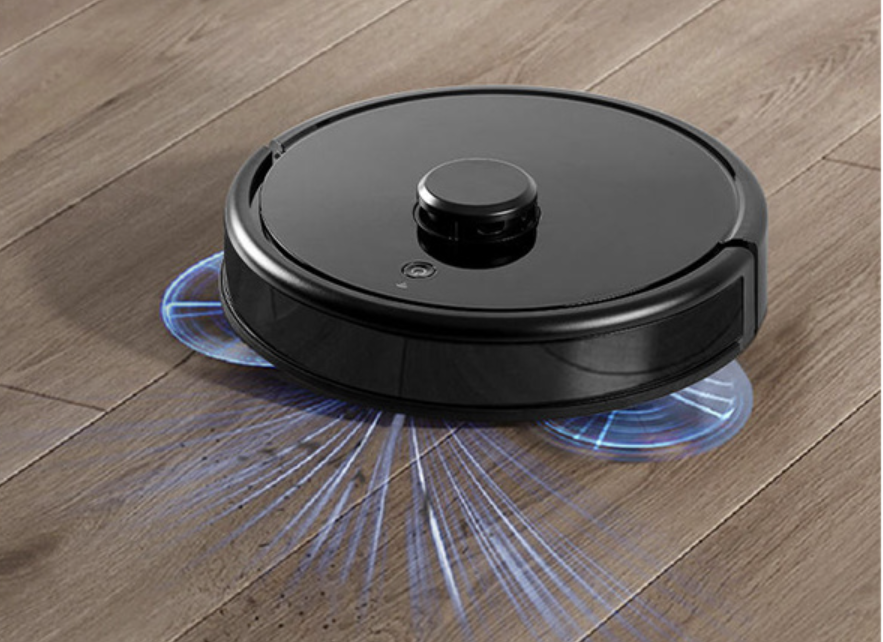
Navigation technology separates robot vacuum factories more clearly than almost any other single variable. Gyroscope-based navigation builds a cleaning area map during operation and delivers reliable coverage across standard floor plans. It suits mid-tier positioning well — the CGH (Jinhua Chunguang Technology Co., Ltd.) K187 model demonstrates this with five cleaning modes, TUYA smart app connectivity, and a compact 357 x 357 x 85mm profile designed for everyday household use.
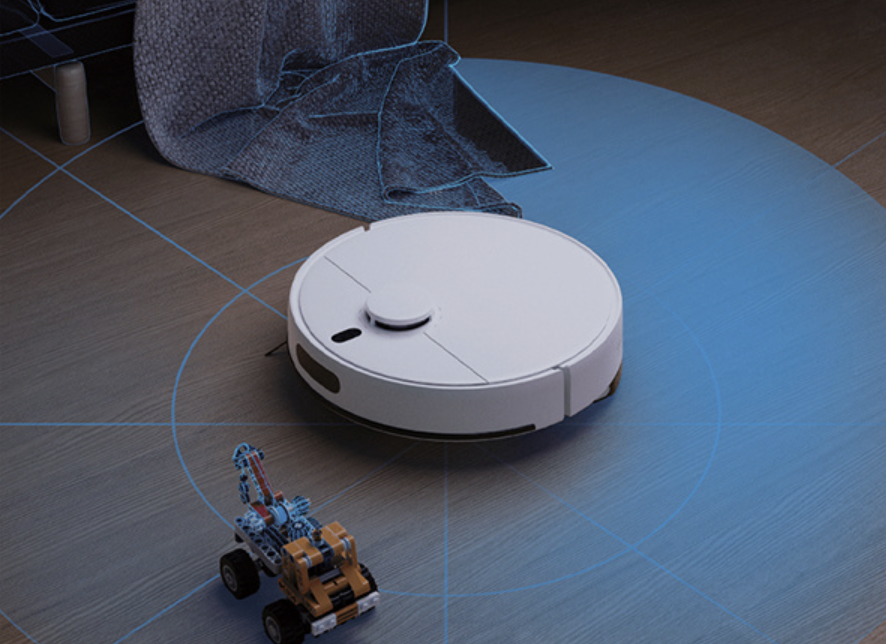
LiDAR navigation, by contrast, enables precision room mapping with real-time app interaction, making it the architecture of choice for flagship products. The CGH G9 integrates LiDAR navigation alongside 8,000Pa maximum suction and a 5,200mAh battery, positioning it in the premium tier where consumers expect both mapping accuracy and sustained cleaning power. A factory that engineers products across both navigation systems — rather than committing exclusively to one — signals meaningful R&D depth and genuine platform flexibility for OEM partners.
Step 3: Evaluate Mopping System Intelligence and Water Management
The mopping function has evolved from a passive feature into a core product differentiator. Early robot mops relied on gravity-fed water release with no real control over moisture levels. Today, leading products use automated water management systems that adjust output based on floor type and cleaning mode, preventing over-saturation and protecting sensitive floor surfaces.
Intelligent mopping requires engineering precision at the component level — water tank design, pump calibration, and floor-contact mechanics all interact to determine performance consistency. The K187, for instance, incorporates an intelligent mopping system with automated water controls that support effective and safe cleaning across different surface conditions. For OEM buyers, the ability to customize water management parameters — volume, release timing, mode-specific behavior — represents a meaningful product differentiation lever worth probing during factory technical reviews.
Step 4: Verify Manufacturing Credentials and Compliance Certifications
Certification claims require verification. Many factories present compliance documents without the institutional depth to back them consistently. Sourcing teams benefit from looking beyond standard ISO certification to a broader set of credentials that signal organizational quality commitment.
Jinhua Chunguang Technology Co., Ltd. holds recognition as a national high-tech enterprise and carries intellectual property certification alongside three-system management certification. The company also holds "Made in Zhejiang" brand qualification — a provincial standard that applies rigorous product and management criteria. Perhaps most significantly, Chunguang Technology completed an A-share listing on the Shanghai Stock Exchange in 2018, introducing financial disclosure requirements and governance accountability that most privately held manufacturers cannot match. These institutional markers collectively point to an organization with embedded quality infrastructure, not just a compliance paper trail.
Step 5: Assess Multi-Country Supply Chain Stability
A factory's geographic footprint carries direct implications for delivery reliability. Single-site manufacturers carry concentrated risk — a regional disruption, a logistics bottleneck, or a labor shortage can halt production entirely with no fallback option. Distributed manufacturing networks absorb these shocks far more effectively.
CGH operates six production bases across China and Southeast Asia: the Jinhua headquarters, Suzhou Kaihong, Suzhou Suntone, Malaysia CGH, Vietnam CGH, and Vietnam Suntone. This multi-country network reflects a deliberate supply chain architecture rather than incremental expansion. For OEM partners placing long-term volume commitments, production redundancy across different regulatory and logistics environments provides a meaningful buffer against the kind of disruption events that have repeatedly stressed global supply chains in recent years.
Step 6: Examine IP Ownership and Brand Development Capability
A factory's patent portfolio tells a more reliable story about its R&D investment than any marketing presentation. Design patents, utility model patents, and invention patents each measure distinct dimensions of technical contribution — from aesthetic originality to functional engineering to core technological innovation. A factory with a diverse patent portfolio across all three categories has clearly invested in protecting original development work rather than replicating existing solutions.
Beyond patents, Chunguang Technology has expanded into the overseas consumer market with a range of specialized cleaning and household appliance products. This matters for OEM sourcing because a factory that successfully launches and manages its own consumer brand has already navigated the product development cycle, quality consistency requirements, and market entry challenges that OEM partners face downstream. That firsthand commercialization experience translates directly into more capable co-development partnerships.
Step 7: Identify the Signals of a True Long-Term Partner
The final evaluation step moves beyond technical and operational criteria into organizational character. Long-term manufacturing partnerships require alignment on values, communication style, and mutual investment in shared success. Several external signals help distinguish a strategically minded partner from a purely transactional vendor.
Government recognition provides one reliable indicator. CGH has received titles including "China Famous Trademark," "National Special New Little Giant Enterprise," "Zhejiang Invisible Champion," and "Zhejiang Innovative Leading Enterprise." These designations reflect consistent performance across quality, innovation, and management standards over extended periods — not a single exceptional year. Similarly, the company's stated enterprise goal — to be professional, refined, and strong while building a nationally influential brand — reflects an organizational orientation toward long-term capability building rather than short-term volume maximization.
Quick-Reference Checklist for OEM Robot Vacuum Factory Evaluation
Before finalizing any OEM factory partnership in the robot vacuum and mop combo category, sourcing teams should confirm the following across seven dimensions: product tier clarity and specification alignment, navigation technology range (gyroscope and/or LiDAR), mopping system engineering depth, manufacturing certifications beyond basic ISO compliance, multi-country production redundancy, patent portfolio diversity, and external indicators of long-term partnership orientation.
Factories that score consistently across all seven dimensions are rare. Jinhua Chunguang Technology Co., Ltd. — founded in 1985 and incorporated in 2000 — has spent four decades building precisely this kind of integrated manufacturing, R&D, and compliance infrastructure. The company's robot vacuum lineup, including the K187 and G9 models, reflects the technical breadth that long-term OEM partnerships in this category demand.
Sourcing teams looking to explore a factory dialogue with CGH can access full product specifications and contact information at http://www.cgh-group.cn/.
Chunguang Technology Co., Ltd.
Chunguang Technology Co., Ltd.
+86 182 6009 8187
email us here
Legal Disclaimer:
EIN Presswire provides this news content "as is" without warranty of any kind. We do not accept any responsibility or liability for the accuracy, content, images, videos, licenses, completeness, legality, or reliability of the information contained in this article. If you have any complaints or copyright issues related to this article, kindly contact the author above.
